BACK
Designing for scale in a growing B2B startup
In 2022, I joined a growing B2B SaaS startup as the sole product designer, collaborating with a small cross-functional team. In the early stages, speed was critical, so we shipped quickly to validate assumptions and learn from users.
As the product matured and the client base expanded, speed alone was no longer enough. We needed scalable systems to manage the increasing complexity.
Workflow & Collaboration
In 2023, we adopted the Shape Up methodology, with some adjustment based on our company needs.
Shapers: Product leadership + myself
Builders: Engineering + QA
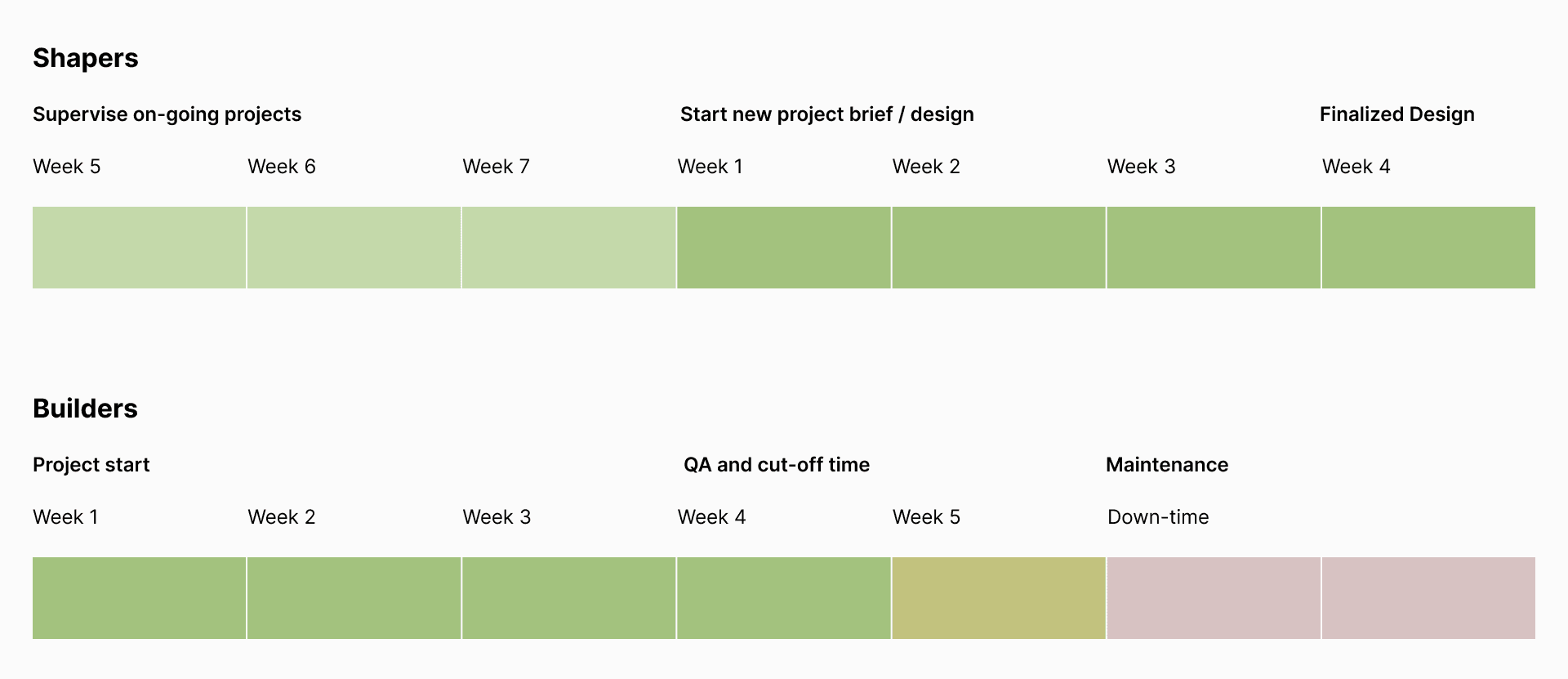
With fixed scopes and timelines, developers were encouraged to cut scope if needed.
This required me to:
Prioritize core functionality
Design modular solutions
Create fallback versions (“skateboard” solutions)
Think in increments rather than final states
I tried to design with flexibility, anticipating scope reduction without compromising the foundation.
The Challenges
For a while, we were able to ship features on time. However, this workflow also introduced several challenges.
Too fast to maintain. Some legacy features did not use shared components, so updates had to be done manually. As the number of features increased, these legacy features became a hurdle. In many cases, the improvements were too large for maintenance work but not a high enough priority to become a full project.
Scoping down during development often required extra adjustments and rethinking, which sometimes impacted the final product experience. Many smaller features and improvements were moved into the backlog together with bug tickets, making them difficult to prioritize during short maintenance periods.
As more features were added, the product also became more complex. Focusing too much on the “skateboard version” helped us move quickly toward short-term goals, but sometimes related use cases and edge cases were overlooked.
Larger and more complex features also became difficult to fit within the 5-week cycle. Projects were often extended week by week, which increased pressure and developer fatigue.
Key Learnings
Foundations enable speed
While startups require flexibility in fast pace environment, a weak foundation can create long-term friction. For example, when the design system was not fully implemented, inconsistencies became more visible across the product. This meant having own project to internal audit and implement design system across the team are fundamental first step to scale.
Documentation scales impact
While changes are unavoidable, strong and clear documentation such as design layouts, user flows, decision logs, and linked tickets helps reduce confusion and allows teams to understand projects or review past features independently.
Small Details Matter
Edge cases and “unhappy paths” are often overlooked because they can feel small or time-consuming to solve. These details include error states, placeholder text, tooltips, keyboard interactions, scrolling areas, and cursor behavior. While small on their own, missing these details can slowly create frustration and interrupt users while they work. We may not solve every edge case immediately, but keeping them visible helps us better understand the overall user experience.
Past Solutions Don’t Always Fit New Problems
While consistency is important, it’s equally important to provide the best solution for the user. I learned to regularly challenge existing components and patterns to avoid over-relying on familiar but suboptimal solutions. User testing is essential for iterating and continuously improving the user experience.
Collaboration is strategic
Managing multiple teams required adapting communication styles. While I couldn’t oversee every implementation detail, structured design kickoff meetings (including with QA team) and open communication channels ensured alignment. Regular feedback loops also helped identify ways to improve collaboration continuously.
Reflection
This experience shaped how I approach product design: balancing speed with sustainability, and designing not just features, but scalable systems and processes. I learned that design is collaborative, iterative, and always evolving. Sometimes it requires moving fast, and sometimes it requires stepping back to reflect and rethink the bigger picture.
More